Showing posts with label desert roadtrip. Show all posts

1.26.2014

these are letters from the road (desert road trip #3)

Q76A9843

12/25/2013 -- C.C.
I wish you were here with me, Caroline! I have learned so much this year. I have accelerated and then slowed down. I have failed and I have been made aware of my imperfections--I am not always reliable or kind or compassionate or selfless--and yet--all is well here, and right now--I have seen and known God more than I ever have, and that has given me the capacity to love better, despite all of my flaws. Everything seems to be more delightful, while mattering less, if that makes sense at all. There is more of a levity to living, even though I can also feel the gravity of each moment. I can’t recount to you all that has happened since we last saw each other, but I can tell you where I am right now.


12/25/2013 -- A.B.
We've been listening to Bob Dylan quite a bit on the road (actually, we asked friends to make playlists for us and each has been remarkable, but no one has put Dylan on their playlists!) -- such great traveling music, with a sense of awareness of everything around him and in the air, and yet he remains somewhat detached from it all. There's a wandering feeling to his music that you and I both know well, and then there's the storytelling, and the poetry, and the muttering, and the harmonica! It's been awhile since I listened to Bob, but every time Bob is something new! 

How are you? How is the city? I love living in cities--but I'm not sure if it's good for my soul--it feeds the worst parts of me, so I need to get away often--to make sure I'm caring about the things and people and matters I want to care about--and not get carried away with the material surfaces of the urban simulacrum--if I'm allowed to call it that.


12/26/2013 -- K.O.
When we entered the chapel, the service was solemn and small--and it all seemed really formal--and then the priest, Father William, blew his nose, and I almost burst out laughing. I think the funniest moments are flukes--when something almost too ordinary disturbs the peace or flow of things--little awkward charms, situational humor, you know. I think you would have laughed too! Because everything at the abbey is so much simpler--quieter and emptier--the funny, awkward moments are so much more pronounced. 


12/24/2013 -- J.R.
The desert is not so alluring or attractive at first glance--or comfortable, for that matter--but it is open and expansive, stark naked, so different from the city lives we're used to, where people scurry around, in close confines but so unaware of each other, unaware of so many sounds and places and faces that just fade into the background, become distracting noise--distraction from some other, seemingly more important focus, because we're always going somewhere and what's ahead seems so much more important than what's here right now. In the desert, your job is to notice, to be attentive. It is easier to listen to God, and when all else fades away, it's clear that we're here to love and be loved by God--it's so easy to lose sight of that sometimes.


12/24/2013 -- S.S.
Amidst this quiet, this empty space, this wide and free landscape, it seems that loving is all we were meant to do. The rest feels trivial you know? How we go about our ordinary lives as if we had to make them into something extraordinary, hurrying here and there but to what end?
...
Leaving most things behind, even for awhile, has given my head and my heart space to breathe. I feel relieved to feel, if even for a moment, unattached. And yet--here, this letter, a token of my attachments, a token of my love...our hearts and souls want freedom and also some kind of tethering. Blaise Pascal described men in three words: dependence, desire for independence, needs. Merry Christmas! I love you!


1.24.2014

this is a sacred movement through space (desert road trip #2)

Q76A9970

City driving makes me jittery and nervous, so I don’t do it very often. The pedestrians and bicyclists are chess pieces haphazardly played by some strange, illogical hand, bullets to dodge. So here in the city, I mostly walk or take the bus, or take BART, mainly to spare myself the stress and the near-convulsive panic I experience when I parallel-park, which I don’t do well in the first place and do even worse with angry drivers behind me glaring laser beams of fire into my car.

But I like sitting in cars, especially on a cold day with just enough sunlight for the car to trap, becoming its own little greenhouse. There’s something comforting about the protective walls of the car, how it separates you from everything outside of it, so that you’re in your own self-contained sphere, unbothered by anything else. Sometimes the car is most sacred when it doesn’t conform to its function, which is getting you from point A to point B. Sometimes you’re just trying to get it together at point A.

But on a road trip, the automobile itself is your prime destination, where you’ll spend more hours than all other stops combined. You might rest your head or fill up on food, but then you’re back on the road again, moving like a vagabond, living like a rolling stone, a wayward sojourner, briefly. A road trip plays out like the Canterbury Tales, in which the pilgrimage from Southwark to Canterbury contains the stories to be told, even though the stories are named for some end that is a mere abstraction while on the road.

Hours pass easily in the car if they’re not the hours leading up to something else, but rather, the hours that you keep and make something of. At the steering wheel, you stare ahead, the vast expanse awaiting, the open space above. You barrel towards the purple mountains in the distance that never seem to get closer or grow bigger. The Spartan trees, the dead trees, the lonely wind mills, acres of mysterious land, touched but untouched, cleared out but fallow, a purgatorio where the mind whirs and wanders.

On long stretches of empty asphalt, you’re focused enough to keep a sharp mind, but you haven’t given your mind away. There is room for daydreams. This is a meditation on the road, the path ahead of you focusing and re-focusing the squadron of voices in your mind, and you’ve got just enough breathing room to let a mellow, contemplative hum sail on through, like the Bateaux Mouches on the Seine, taking the same circular route, over and over again, with new and curious passengers every time.

My dear friend Asa biked through Europe the year after we graduated from college, and he wrote about what went through his mind on these long rides from Firenze to San Benedetto to Lago di Brescia, and he captures well the interplay of the conscious and the subconscious, the focus and the lack thereof. In a letter, he wrote:

"This isn't to say that you don't think about things, it's just that--well--there are long stretches where (I think) you don't. It's what you do tend to think about that's the truly strange part of the whole thing. When I say that one's mind is not one's own I mean to say that, while riding, the subconscious seems to take the wheel (err--handlebars) and kind of just float stuff around a bit. In some cases, this can be a good thing--I've remembered people and places I hadn't thought of in years on the bike--but in other instances, you get stuck on a bad topic, and there doesn't seem to be any real way (at least that I've discovered) of removing oneself from it. I spent an hour during a day's ride, right after a semi had nearly brushed me off of a particularly bad stretch of road, imagining what my head would look like crushed underneath the tires of this same truck. "Like I bloody watermelon," I thought."


***

Q76A9935

Do you remember the first drive you took after a horrible breakup? Or the drive home from the airport after you said a long farewell? That space charged with all the particles of your emotions, the anger, the tragedy, the sadness, accelerating and halting in sync with the car. Whenever my mom gets angry, she clears her mind by going for a drive, detonating her feelings by physically moving through them, a smooth coast along asphalt sanding down the harsh edges of her skin.

I remember a Saturday afternoon in November. We were lying in a car with the seats pushed as far back as possible, backs folded down so we could recline comfortably. There was nothing to do and nowhere to be, so we just lay there, on a quiet suburban street, listening to folk music. The leaves were red, I remember, because when we were walking to the car we picked some off the ground and chose our favorite leaves. There wasn’t much to say, but it was thrilling to be with each other, so we just lay in the car, parallel bodies in space.

Months later, in that same car, we pulled over by the side of the highway, where Bohemian meets Bodega by golden fields of dry grass, and we argued blindly, teary-eyed, about petty things. Petty things that are worth arguing over because in romance, the stakes are great, and every little thing has some unbearable significance, some weighty fear attached to it. As we argued, every turn was hazardous, like city driving. But there was no running away because we were in this cramped little car with each other, with nowhere to go, and we had to stay and figure it out.

In the end, there’s always something waiting on the horizon. Thousands of miles later, when you arrive back where you started, you unpack the car that stoked hours of thought, sheltered so many strands of conversation. That tiny sacred space that moved you through so many landscapes, from the high desert to middle-of-nowhere Arizona, from the Sonoita Mountains to downtown Tucson. Through the redwood forests of California when the sun was setting and you saw only the two red rear-lights of the car ahead of you for miles of windy road, and it seemed like this ride was going to last forever. You fell asleep, and you awoke in awe to a new landscape, and you kept on moving. The car protected you, you felt safe for awhile, but in the end you arrived somewhere else, and you had no choice but to get out and join the crowds again, in the old rhythms of time that the road makes new.


1.23.2014

this was the first night (desert road trip #1)

Q76A9673

Our friend JD is one of the most thoughtful gift-givers we know. When he gave Crystal The Principles of Uncertainty by Maira Kalman, he said that she would understand him better after she read it, as if Kalman's consciousness was an extension of his own.

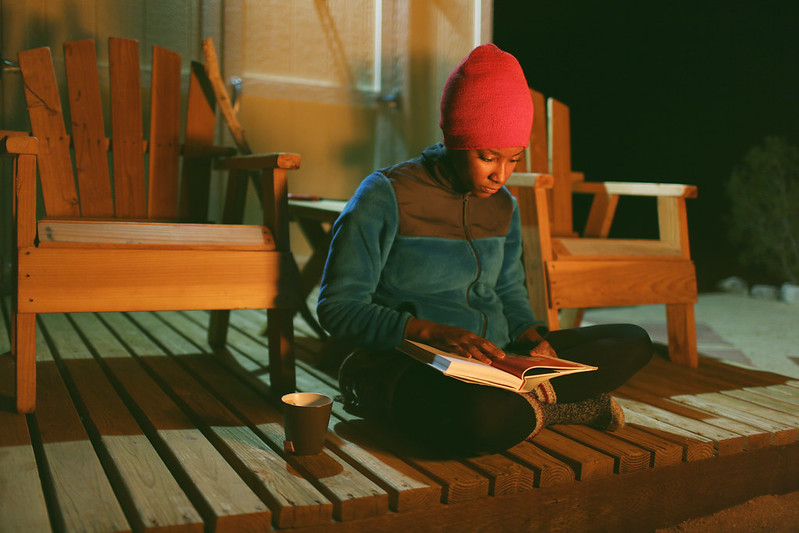
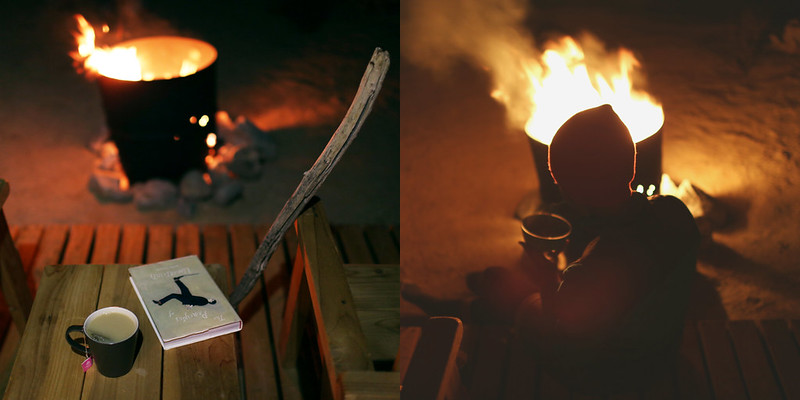
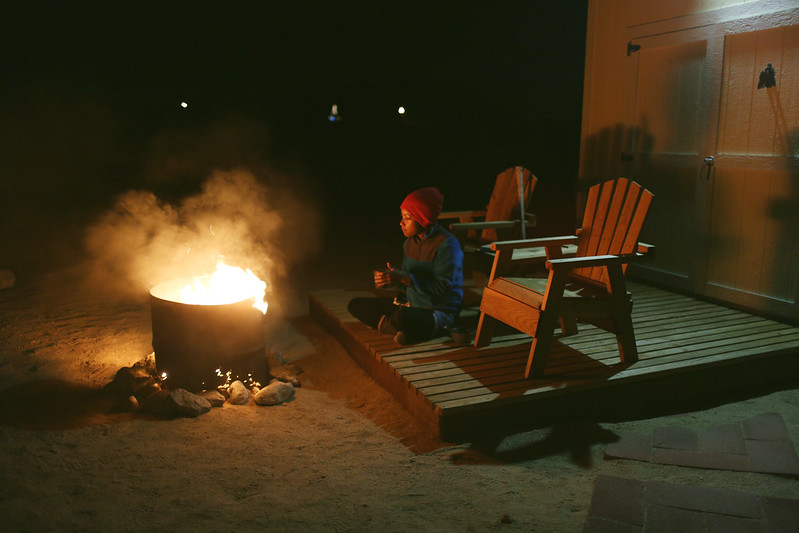
Crystal sat by the fire in front of our humble abode in the desert reading this book, occasionally chuckling, sometimes reading out loud, to me, to the desert air. Even though we had gone to the desert in part to find solitude, it made sense to bring our friends along, in books, in music, in the little bits and baubles that become living artifacts because of what they mean to the people who find them. John Donne says that no man is an island, that every man is a piece of the continent, a part of the main, and we didn't leave to flee from community; in fact we left with the hopes that when we returned, we could give more of ourselves to it.

The first night we arrived in Joshua Tree, it was late, and everything was dark. Sylvia, our host, greeted us when we arrived at her little homestead, a flat sprawling lot of desert sand with scattered debris and an occasional shrub. We couldn't see anything, but the incredible darkness brought forth the light of a million stars that city brights drown out. We looked up, surprised again and again at how the celestial light could pierce through the darkness, and how this was as God intended--total darkness with marvelous light, not lukewarm versions of one and the other.

We heard our shoes crunching against the sand as we made our way to our desert studio, a small barn loft with just enough space: a sitting area, a kitchenette, and a loft for sleeping. I tried to memorize the path from the studio to the outhouse. The little path lights, which projected spiky, leaf-like projections onto the sand, and the petrified branches that were meant to pave a walking way, were sorry second thoughts, haphazard efforts at softening the spell of darkness. It's okay, I thought to myself, I came here to wander anyway.


firebanner

On the road, without expectations, it's easy to find a home wherever you go--wherever you are welcome, wherever you are willing to sojourn for awhile. We were not restless, but we were ready to rest, with all the days that 2013 had piled onto our backs, with all the joyful frenzy of city life that wears you down but pulls you in deeper with all its sounds and people and man-made spaces.

We made tea and a scrappy dinner. Crystal went outside and lit the fire pit by our front porch, and a slight desert wind skimmed the fire, sending it crackling into the air.

Our minds were where we were, not where we could be, or where we were not. The silence made every sound louder and crisper. We did not feel the need to talk loudly, or talk at all, comfortable with being together in silence, alone with our thoughts, but not lonely.

Q76A9640

Earlier that week, we had asked each of our friends to make us playlists for the road, where we would spend a majority of our trip. We needed two thousand miles worth of songs, and we thought, what a way to have our friends here with us, how much more could we know our friends through the sounds they loved, the songs they had swallowed into their souls (how we depend on other people's consciousness to bring forth our own, how we understand the world through sights and sounds imparted to us as gifts!).

The first night was sweet and silent, but there were sounds all around us, echoes of the songs we had heard earlier that day, echoes of the words we had read and wrote, fuzzy whispers of the friends and family who we loved and left, for a little while at least. In stillness we sat, in darkness we slumbered.

And we sweetly anticipated the morning light, which illuminates what darkness had hidden.

Q76A9614-butterflies


"Artists are the voice boxes for colonies of intricately related interdependent creatures, living and dead. No one but Wordsworth could have written Wordsworth's poems, the genius and the primary effort were his, but they only came into being because of webs co collective feeling, labor, memory, and perception that surrounded and permeated him." 

-Janna Malamud Smithan absorbing errand

1.01.2014

this is a new year

desert1

Dear friends,

Happy 2014.

If you've known me for a long time, then you know that for the past decade or so, I've written an annual Christmas letter for my family, which my parents send out (before Christmas) every year to friends and relatives. This year, I shirked that duty, going to the desert on a road trip instead, skipping out on a traditional Christmas entirely. To make up for that, I promised my parents that I would write a New Years letter, so I did. It used to be an update of the family, but since I don't live with my parents, it's become more of a rambling digest.

There's some of you whom I talk to every day, others of you whom I haven't seen in years; and still others with whom I've had only a brief but meaningful encounter. But like I've written before, I believe that once a kinship comes into being, it will never cease to exist, even if it is silent, or latent, for awhile. So for the one time per year when I can flip through the rolodex of my mind, remember the heartstrings each of you have plucked, think fondly of every meeting I've had with you, I do so joyously. I write this letter to all of you, knowing--hoping--that in some way, we're all still connected to one another.

So I hope you enjoy the letter that I've written to you this year--about my trip to the desert, about 2013 and beyond. And if you have a minute or two, please write back and tell me how you are. I'd love to hear from you.

With candor and affection,

Natalie


----


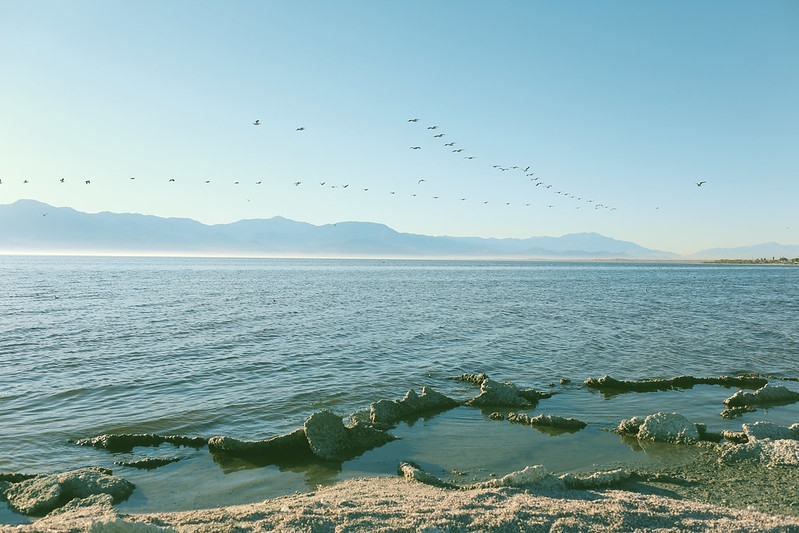
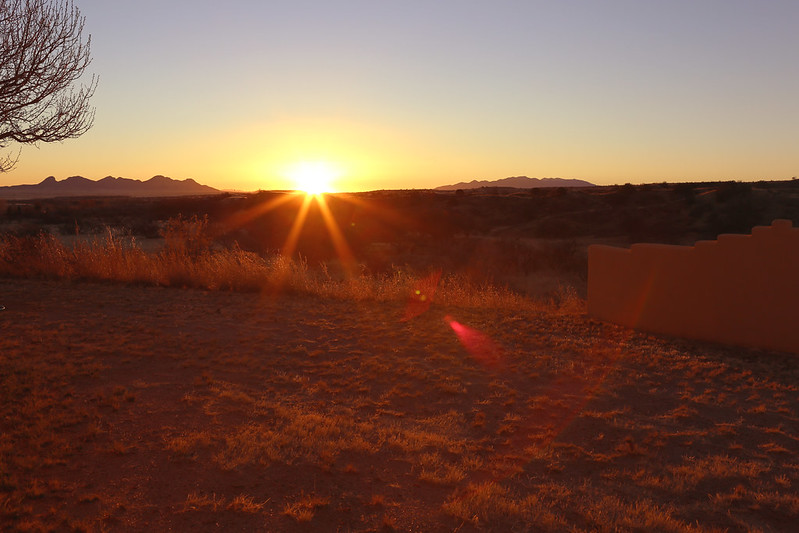
On Friday night, after 2000 miles on the road over the span of a week, I arrived at a warehouse in a desolate neighborhood in Oakland. It was quiet and dark—just parking lots and brick-lined warehouses. My stomach was knotted and tight. For the past six days, I had been out in the desert, on the road, and in a convent; beneath a flowering garden of stars in empty stretches of black sky; in a graveyard of fish bones by a salty, white sea. I had watched the red sun descend spilling warm waves of color over the mountains, black smoke billowing like an ominous cloud behind; floated through fields of dusty blonde cat tails and curlicued reeds of dried desert grass; sailed down a straight and breathless road snaking endlessly through the chiaroscuro contours of purple-hued mountains; freely reeled, rambled, rollicked, never in one place for too long. I breathed in the silence of a monastery, steeped in a wilderness away from everywhere; walked a yellow brick road on a rainbow hill; wrote letters to loved ones on a plain wooden desk; napped; stoked a fire in the still stands of a desert homestead.

Now, in Oakland, at our friend’s dinner party, we were about to join the bustling throngs of civilization again, and I wasn’t sure I was ready to encounter, swallow, and sift through all the noise. Or smile and make small talk, try to yell louder than the music in the background. Wasn’t ready to return to the patterned routines of my ordinary life with dulled senses and a twittering heart.

Of course I knew I’d come back, like every other time I’ve left home, which always begins with a feeling of wanting to leave, wanting unfamiliarity and novelty and a different breath of air. I am, by instinct, a hoarder and archivist, always hungry, always trying to fill up, which has often left me more restless than satisfied, feeling like a wanderer. I read somewhere about the “capitalism of the heart,” in which happiness and experience are currencies to be gathered and seized. Maybe I’ve been wanting to get rich, thinking I could fatten up my spirit by moving from place to place, always looking for the next place to go, anticipating a deadline to usher me into a different geography, awaiting some future joy, as if somewhere else is something better. If you’re lucky or wise, sometimes you won’t desire anything at all.

Sometimes it’s easier to displace yourself and surround yourself with strangers you don’t know, people you’re not attached to. That’s why the first time you leave home, you feel liberated, uninhibited. You’re not responsible for much more than observing lives in which you have no stake. You can construct barriers around yourself. You don’t have to care. You may be living a messy, scrappy life, but you’ve tucked your heart away, falsely manicured, or festering.

When I first left for college on the east coast—a little more than five years ago now—I was hopeful for the revelation of a wild and unhindered life. I was under the impression that the farther I flung myself, the more people I met and the more things I saw, the more worldly wisdom I’d gain. I associated this experience consumption with happiness—with the ultimate pursuit of truth, too—and I constructed my own hierarchy of experiences, which was based on the way I wanted to be viewed, lauded, glorified.

At school, I experienced major culture shock. People talked and dressed differently. Social hierarchies seemed more important, as did your lineage and blood. The details of your résumé and birth certificate carried much more weight, and your taste—in books, music, art, and clothing—reflected how cultured and intelligent you were. Your taste was a boon or a shame; either way, it was judged. As a result, I always felt like I fell short of what I was supposed to be: my taste was never refined enough, the depth of my knowledge too shallow. I didn’t try hard enough, even though I felt like I was always trying and wanting more than what I had. I also felt burdened by the expectation that I should be grateful—and thus unconditionally happy—for admission into a school that the world branded as ultimate, the apex of all college experiences.

Even beyond school, I searched for a place where I could be more than an observer and outsider. I lived amidst constant noise, hoping that the voices of each place I sojourned would light my way through a labyrinthine maze of discovery. There were stretches of time when I lost sight of God, who isn’t forceful, but is easily forced out, if you’re constantly searching for a home in this weighted world. In this relentless pursuit of gratification, of what you think is self-enlightenment, you begin to collect every shard of tragedy that breaks open along the way, while little joys fall through your fingers like pixie dust. You’re the perambulating ruffian pushing a shopping cart full of useless artifacts. Your cart is brimming, but you’re still looking for more.

******
desert2

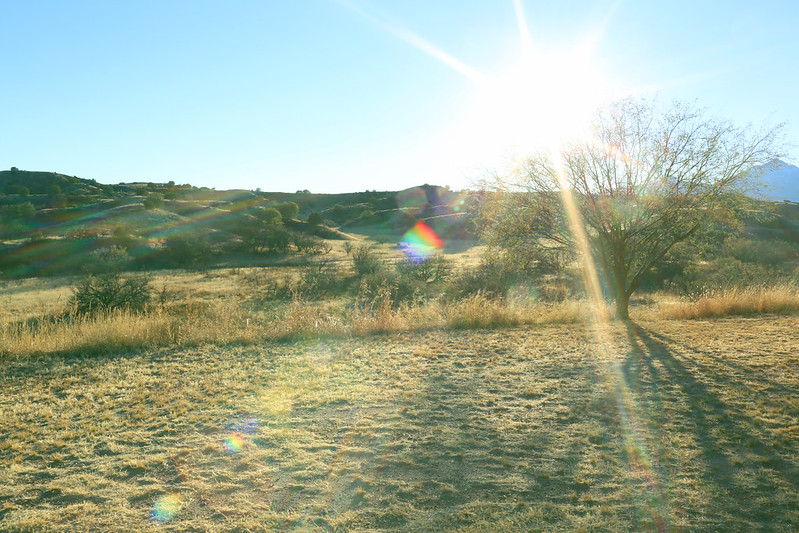
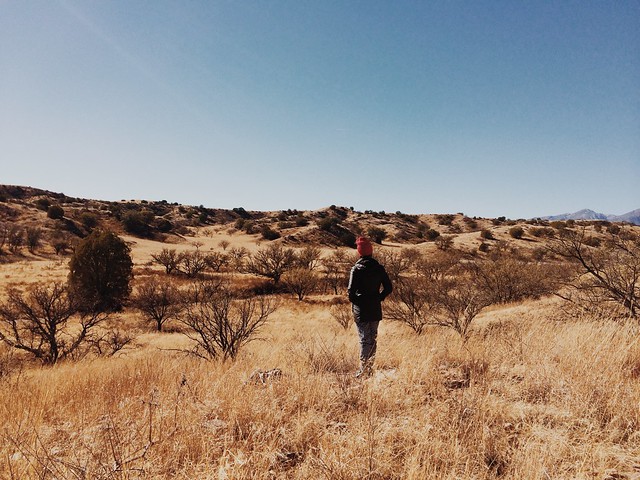
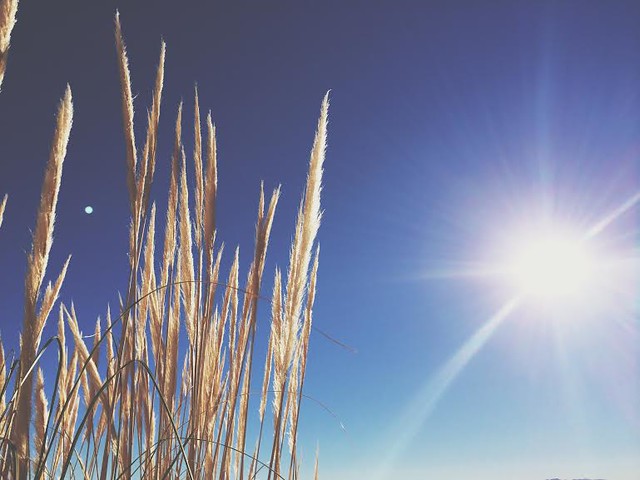
The desert is empty and sparse, a thinly veiled landscape that is purposefully uninviting. Everything protects itself. The physiology of its fauna and flora are telltale signs: spiny, prickly, precarious and beautiful, guarded by needles that stab lest you try to steal its treasure.

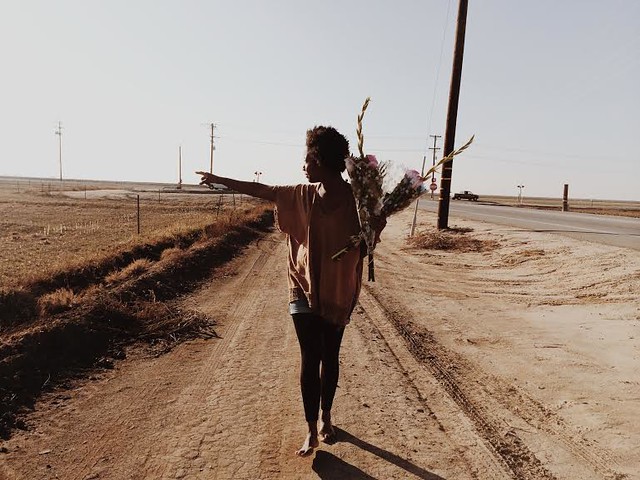
But the emptiness of the desert calls you to pay attention and fully inhabit your consciousness. You see the desert quail scurry across the road; notice the detritus laying haphazardly on the open plain; watch the trails of steam rise up from the hot sands. Like a monastery in which lack strengthens presence, silence focuses your attention; sometimes it sharpens sadnesses and amplifies joys. A fermata is held over every feeling. Solitude beckons. You have everything you need in this moment. Nothing is urgent. The future does not require your attention. Your heart is filled because you are no longer in want. The horizon, a bottomless basin that cleanses you with its smooth wash of colors, filters out all the thorny noise that was pricking you just days ago in the city. Now you have space and time to listen to God, and the first principles by which you want to live your life float to the surface, a buoy so achingly clear in an infinite blue: love God first, and love others. By that principle all else will fall into place.

Another year of moments is passing: moments of indefatigable ecstasy, moments of grief-worn insanity, moments of wondering why and how I ended up here, and whether I’m okay. This year I began to invest deeply in one place, in a real community in San Francisco—and how delightful that has been, to have a family of friends in this ever-changing city, while living so close to the family who raised me—both are gifts. Since I left home, I’ve never felt more anchored to a place than I do here—but I think it’s more than the place: I’ve begun to anchor myself to a way of living that gives up everything that school taught me to cling onto: productivity, success, being good enough, worrying that I don’t have enough or am not enough, stressing out.

In a letter to my sister, Naomi, I recounted to her ten ways of living that were important to me in 2013. Here’s what I told her: Live in community. Live vulnerably. Live freely. Live with God. Keep searching for God. Prioritize your life so you have no regrets. Let things go. Leave room for serendipity. Rest. Call Mom and Dad. And in all those things, love deeply, unconditionally, and sacrificially.

******

On the night of Christmas Eve, we arrived at a Cistercian abbey after hours of silently winding through the dark dirt roads of the Sonoita Mountains. At midnight, we attended mass in a small chapel on the hill, with a few other guests scattered among the plain wooden pews. Faded paintings of saints lined the white brick walls, and potted poinsettias graced the aisles. Guests sat in one room; nuns in another. We could not see the sisters. We saw only Father William, a visiting priest, who sat behind a massive pulpit carved out of a gnarled tree trunk. Between scriptural readings, a sister sang unaccompanied, a single, shrill voice quivering, warbling, humbly following a melody line. Father William urged us to “enter more deeply into the mysteries of the son of God,” and retold the story of The Velveteen Rabbit, a children’s book by Margery Williams. He read these lines, in which the Rabbit asks the Skinned Horse what it means to be real:

“Real isn't how you are made," said the Skin Horse. "It's a thing that happens to you. When a child loves you for a long, long time, not just to play with, but REALLY loves you, then you become Real."

"Does it hurt?" asked the Rabbit.

"Sometimes," said the Skin Horse, for he was always truthful. "When you are Real you don't mind being hurt.”

So often we wait for the whisperings of the world to teach us how to exist, and we let the whistling winds blow us from one place to the next, with a vague vision of where we want to end up, but no idea of how we want to live out the moments that will get us there. So we continue to fill our lives with momentary pleasures, aesthetic pursuits, crafting and arranging a life that is fit for the person we imagine ourselves to be. In the process, we forget our souls; we forget the one true love that makes our hearts real.

In the coming year, let love guide your every action and thought. May you experience the joys and heartbreaks of intimacy, baring your soul shamelessly, fearlessly. May you welcome the discomfort of the change you cannot control, and patiently bear the little battles of a mundane existence. May you continue seeking God, a changeless face that never bores, never turns away. May you breathe in every moment, listen to the silence, fling doubt away, and let faith and prayer inhabit your being. May you remember God, even when you are weak and hurting. May you call a friend, ask for help. Thank God for every meal, blessing, and heart you touch. May you love God first, and love others accordingly.
desert4