Showing posts with label coffee. Show all posts

1.21.2014

this is not a still life

Monastic life. #desertroadtrip #sanctityinthewilderness #santaritaabbey

The jaws of the house were pried open by the squawks of women, who inhabited the place like noisy birds, chittering like lunatics. The dust on the furniture had not been touched for years. (It is possible to live somewhere and never touch the surfaces of the objects in it, objects stationed like islands, merely existing in an ocean of voices and spirits, which are the real materials of households held up by circuitous irrationalities.) The only thing keeping the house from ruin was the insanity it possessed: insanity the flesh, the lifeblood, the current moving through a wooden skeleton.

In the morning, hot water boiled on the stove. Coffee grounds waited in a can. A book sat open on a wooden credenza, which had been sanded down to soap-like perfection. White cotton panties draped atop ivory candles, melted down like tears. Lozenge wrappers that had missed the wastebasket lay like petals scattered by flower girls, waiting to be picked up by a gust of human wind. There was nothing new about today, the same quietness delicately hovering above a pot of dawn darkness. Lukewarm blood, not yet rolling. Her stomach, the keeper of her every sadness, anxiety, restless thought, was clenched like a baby’s fist senselessly holding onto the seams of scrap linen, as if the tension of her hand could stop time from tumbling forward. She had labored to sleep, an effort made more tireless by rushes of dreaming and feeling that the ordinary tedium of daylight holds at bay. These fuzzy, flickering pictures of a past not yet forgotten and a future so far forward were the bookends of her unconscious mind.

6.20.2013

this is fika in the fabric of our lives


*In Swedish, fika means “coffee break.” Fika is a coming together of friends for coffee and something sweet. It isn’t an occasional occurrence; it is a daily habit that is woven into the fabric of people’s everyday lives. Fika is taken before work and after work, sometimes in the late morning or afternoon, other times in the evening. It bookends and breaks up the day. There’s no one mandated time for fika, only that it is taken regularly, gladly, and deliberately, with friends.

*In every society and culture, people come together to share food and drink. Fika ritualizes this idea, making coffee and pastry into a social institution that is distinctive in its casual, frequent, but still intentional nature. Its ordinariness means that it can be seamlessly woven into daily life, a sort of mini-communion taken over and over again throughout the day. It is the breaking of bread and the drinking of wine, secularized, but still symbolic: of friendship, of solidarity, of community, of pause from work, of the value of people and camaraderie, of the small but meaningful moments that sweeten and deepen relationships.

20160604-breakfast

*In Helene Anderson’s book The Swedish Table, she writes that fika establishes friendships and social circles; it is never romantic, but it is a marker of whom you care about and who are the pulses in the rhythm of your life.


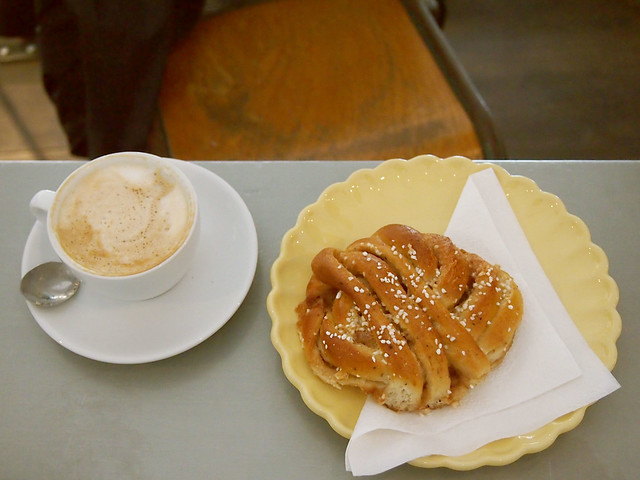
*What is the physical substance of fika? At its most basic, coffee and a Swedish pastry, like a kanelbullar (the Swedish version of a cinnamon bun) or a cardamom bun, both of which are yeasty and doughy, less buttery than a croissant, and not too sweet. This is a classic pairing of a bitter drink with a sweet food, which strikes the kind of balance that neither can achieve alone: merely caffeine-fueled, on one hand, or purely indulgent, on the other.
20130604-fabrique2

*It seems that every culture has its version of a social non-meal that consists of complementary food and drink. In Italy, men stand around espresso bars with un caffe e un cornetto or biscotto in hand, chatting about the business of the day. In South Africa, the pastry-drink combo of choice is a rusk (similar to a biscotti but larger and more cake-like) and rooibos tea. Taiwanese breakfasts feature youtiao (a Chinese cruller, literally meaning “oil strip”) dunked in hot homemade soymilk. And of course, dim sum, a style of Cantonese tapas, is the food component to a much larger Hong Kong institution, yum cha, which literally means to “drink tea.” Going to yum cha means that you’re eating and drinking tea (usually of the Jasmine or Chrysanthemum variety) with friends and family, carrying the same social implications as fika. And of course, the ceremonial British tea time, which can be casual or breathtakingly lavish, is another social ritual with complex codes and etiquettes that bears social, political, and economic weight.
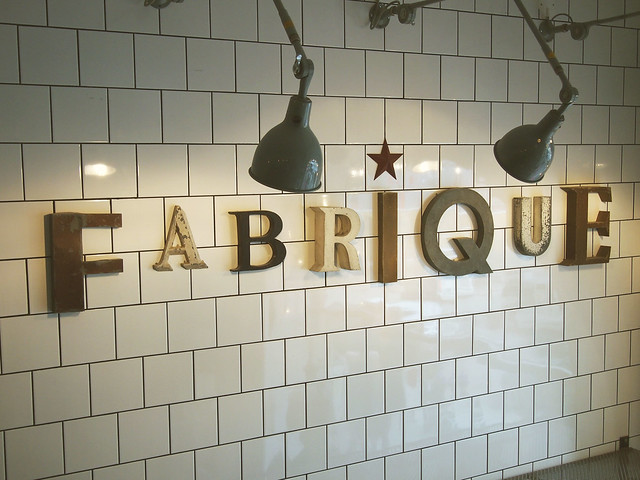
20130604-fabrique

*In The Writing Life, Annie Dillard writes, “How we spend our days is, of course, how we spend our lives. What we do with this hour, and that one, is what we are doing.” Though the passing hours of our day may seem insignificant, I’ve come to find that the quality of my life is often determined by the interstitial moments, the small transactions that may seem mundane but become the threads that connect all the different parts, people, and places in my life. How we break up our days, for instance, might end up being the anchors around which we float. 

*If we take a cue from the Swedes and transform our coffee breaks from a time of zoning out to a time of honing in on the relationships in our lives, maybe the quality of our lives will be that much better—for it’s often not the major life events that determine whether we pass our days well. It’s the daily sustenance that we take in with our minds and our senses, our hearts and our souls; the bread we break and the coffee we drink with our friends; the kinship in which we partake when we sit down, for just an hour, to shoot the breeze with a friend.

12.26.2011

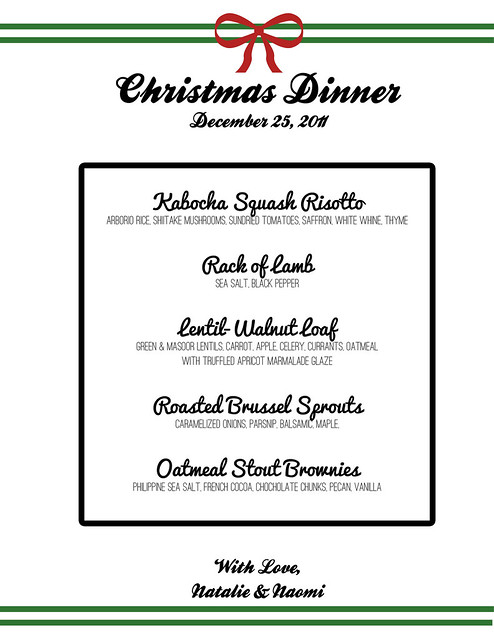
this is Christmas dinner

christmas-menu
*Naomi and I spent all afternoon prepping and cooking dinner as a Christmas gift to our parents. Labor of love, man. Better than any material thing, right?

*It was a good meal with bad lighting, so I'll let you imagine what it looked like. It tasted delicious.


_MG_1723

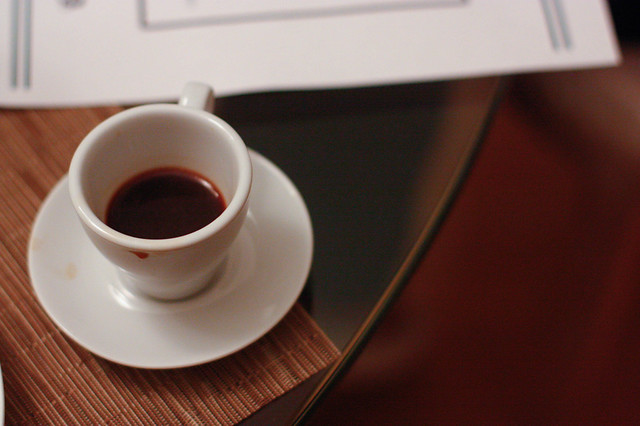
*The night ended with shots of espresso, and then Naomi and I headed out for a late-night screening of Girl with the Dragon Tattoo. Intense, dark, violently graphic, but I liked it. More on that later.

*Here's to the few remaining days of 2011...

1.10.2011

this is the fall flavor that never fades

_MG_3629
_MG_3634
*vegan pumpkin banana bread with walnuts
*spread with strawberry jam, taken with coffee = cozy afternoon snack

1.09.2011

this is cake for a cuppa

_MG_3777
*Coffee cake I made for new years' day brunch.
*This is the recipe i used. except i forgot the walnuts. it still turned out well though.

*Coffee cake is special because it is a treat made for a drink. I like non-alcoholic food-drink pairings (probably because I do not particularly enjoy alcohol). Like green tea + a dense lemon pound cake. Or dark chocolate + a cappuccino. Or (almond) milk + a fudgy, practically flourless brownie (better than milk + cookies). One of my favorite things about Italy was having a couple of crunchy, buttery frollini with a cup of English breakfast tea.

*cute apple coffee cakes in muffin form
*literal coffee cake

12.29.2010

this is christmas eve breakfast

IMG_9377
*Christmas "latkes" (potatoes, egg, flour, salt); stovetop Lavazza espresso


Note: My trip home from Europe was a huge ordeal because of the weather conditions. I was stuck at the airport for 3+ days and in the process, lost all of my luggage, including my laptop, cameras, and hard drives with every photo I've ever taken. I am trying to forget about this and just move on. Back to square one.

12.16.2010

this is one treasure of the Italians

F1000024
F1000021
F1030002
*what we call espresso, they call caffe. what we call coffee, they call toilet water.

i will miss standing at the bar with Italians taking my espresso. i will miss the ubiquity of the small espresso cups. i will miss always having frothy espresso.