Showing posts with label memories. Show all posts

1.15.2014

this is love stew

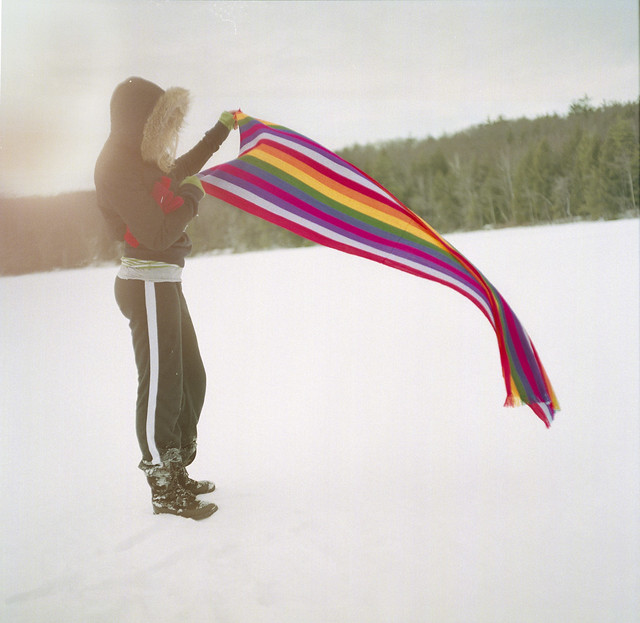
RainbowScarf1

All the ways I’ve learned to love, or not love at all, have rested on the belief that my heart is fragile, like those delicate glass orbs, frosted with glitter, that we used to hang on our fake Christmas tree. At some point, I realized that those ornaments were as likely to break if I clutched them too tightly, as they were if I let them slip out of my hands, dispersed by gravity into smithereens.

In middle school, when all the girls went around in a circle saying which boy they had a crush on (boys came and went like fashion trends) and who we needed to make code names for, and who was the best handball player, I kept silent. “Who’s your crush, Natalie?” “No one!” I would retort, quickly and snappily. “You’re lying! Tell us who,” they’d whine back. “I swear, no one! I just don’t like anyone right now,” I’d say, exasperated, arms crossed, defending myself against what seemed like accusations.

During my freshman year in high school, one afternoon in November--after school had let out, I had stuck around for something or another, somewhere on campus, and then around 5 or so, went upstairs to my locker in Dobbins Hall to pack up my bag before leaving campus. I climbed the two flights of stairs, and when I reached the top, was intercepted by a skinny boy with floppy black hair that draped like a silk curtain across his forehead, covering most of the top half of his face. He was walking away from a group of friends--and towards me--but I didn’t know him, and had never met him.

He walked right up to me.

“Hey,” he said. “Will you go to winter ball with me?”

“What?” I said, averting my eyes. His question shocked me. The casual way he asked a question of such gravity--to a thirteen year old, no less--left me breathless and panicked. I didn’t think I heard the question correctly.

“Will you go to winter ball with me?”

I paused, now feeling dizzy, a sense of vertigo displacing me in both time and space.

“What?” I said again--hearing the same question I had heard before.

He repeated it a third time, “Will you go to winter ball with me?”

I was silent, lock-jawed, spooked by this Jack-in-the-Box that had so abruptly appeared in my otherwise safe and normal adolescent existence.

I stared back at him.

“Why?” I spat out, the only word I could utter--and with that one mysterious word, turned around and ran down the stairs as quickly as I could, out of the building, face flushed hot red, heart galloping, me, panicking. Might as well have been fleeing from a burning building.

I’ve always thought that question “why?” was illogical and cruel, sickly irreverent. From the moment after that word left my mouth to this day ten years later, I am embarrassed by that handicapped response, so immature, so inane, so graceless. I never talked to that boy again, though I admired him from afar after the fact--I was interested in why he was interested in me.

Despite its lack of grace, the question “why”--a question I still ask of the feelings in me that feel like afflictions and not births--wholly embodied my reaction to--even the possibility of--romantic affection, which was: how could you be interested in me? How could you love me? And anything that involves you-liking-me-and-maybe-me-liking-you was tremendous and terrifying, like walking out onto the high perch of a diving board, imagining how much belly flopping would hurt and how much water would go up my nose and into my ears, and how doom was so plainly inevitable. I always expected the worst. Anything with a high chance of loss wasn’t worth much of my time--or heart--at all.

At best, this was all one big terrible joke, a ploy to humiliate me. I could make a conspiracy theory of anyone's affection for me.

I’m sure there were many psychoanalytical reasons why I felt this way, but in the landscape of my consciousness, surely the movies I watched played a part. The Nora Ephron movies (You’ve Got Mail; Sleepless in Seattle; When Harry Met Sally) and a whole slew of Julia Roberts chick flicks (Notting Hill, Pretty Woman, Runaway Bride) were highlights in my dad’s VHS collections, so my sister and I devoured them too, with seriousness, with a weighty sense that these narratives were the way things were supposed to be. They were some of the first romantic narratives we encountered.

This is what they laid out: A man meets not just a woman but singularly, the woman, and the romantic entanglement relentlessly works itself out because it is destined to be so. No matter the obstacle, his love is reserved only for her. That became my belief--that my love was reserved, and should be preserved ruthlessly, sealed off to anyone who inquired about its existence, kept in the cellar, salted and cured, hoarded for winters to come. I would not release my love so easily, lest it be snatched from me. I believed that once I let it go, my love would float away like Moses down the Nile River.

The first safeguard: never admit attraction at all. Admission was weakness. Giving away even a piece of myself was to make myself vulnerable; it was to skin myself while still alive. I would never whisper of even a fondness for any boy I knew, and whatever delights welled up in me, I hid away, pounded down into myself. I was determined to contain it all in the stuff sack of my being, this compression bag that was as terrified of what it contained as it was of letting anything out.

This was an existence of silent yearning--and confusion--in which I superimposed the narratives I encountered--in books, movies, music, etc.--onto my own desires, everything a future story that could only be contained in my head at present. I’d not let my heart make a single sound, though its inclinations towards love and being loved never submitted to death for lack of entertainment.

In the first few months of college, I met Shannon, who would become my best friend. Shannon loved ceaselessly, shamelessly, and hung her loves like little charms around her neck, even if they sometimes scraped at her skin or made too many jangling sounds. She had a high school love who tore at her heart for many years after they had broken up. The memory of him conjured easy tears, and his face was embedded in so many songs and even in the faces of strangers she had never met, whose one word or gesture or piece of clothing could transfigure into his. She didn’t know why she couldn’t let him go (we never really do know though, do we?). She was still netted up by the idea of him. It was never as easy as burning the physical mementos of him, which she did occasionally, ceremonially. Those mementos all turned out to be mere effigies, never the real things at all.

I saw all the wispy little loves she breathed in, how she could continually wring her heart out, though it never dried up. She never had any less love to give, even though, by admission or by thought, she could give so much of it away.

During our third year of college, she fell in love with Eric, who worked at a cozy little bread shop on Brattle Street, a bare-boned, cramped space with wooden interiors, always smelling of yeast and sawdust. She visited the bread shop whenever she could--multiple times each week--always ordering the same thing (the densest, most fragrant vanilla bean-flecked loaf and an over-priced slow-drip coffee). She always asked for the heel of the loaf--the end-piece, she called it--which had more crusted surface area than any other piece. He began giving those to her diligently, automatically, whenever she came in, with her mane of tangly blonde hair. She was once mistaken for Ke$ha.

When the price of the loaf rose by 25 cents, Shannon was indignant and said that she might boycott the place entirely--but I knew that this declaration was an impossibility. It was a failed attempt at detachment.

Unlike me, Shannon wore her emotions the way she did her make-up: heavily, brusquely, sometimes recklessly. Out of self-proclaimed necessity. It was easy to see her embarrassment or pain, which always seemed to stun her, crumple her, and those were the times she ran away--when she could not bear to let her pain be known--because she couldn’t stifle them, so she just left, often frantically. She wound her loves so tightly around her heart, and even when the spool rolled and spoiled, unraveling ceaselessly, she never cut the thread, even if she threatened to do so.

Toward the end of that third year, we knew we were leaving campus soon, so Shannon decided to give Eric a note, declaring her love in a charming and off-handed way. The note was ripped around the edges to look like a casual remark, unmeditated. She walked in, ordered her loaf and coffee, and as he reached over the counter to hand her the coffee, she passed him the note saying, “This is for you.”

She cried that night, telling me how embarrassed she was to have flaunted her silly affection the way you might feed ducks at a pond, scattering bread for the pecking flock. That the affection was unrequited did not bother her--it likely deepened the pining in fact. Though she regretted her gesture, I admired her--and still do--for her easy admissions of love and delight, little bubbling geysers sporadically spewing forth; her proclamations of being enchanted by someone’s beauty, which instilled in her a sense of God-inspired awe, the way beautiful things point us back to some divine mystery we cannot fully comprehend. We are strengthened by the ethereal whispers of gestures, faces, words, moments, and rhythms that etch themselves onto our swelling hearts--the ones no one else notices--and those fluttering wings of beauty we meet--if we care to meet them at all--are made more glorious by our attachments, migrating here, there, everywhere.

A year ago, Shannon called me from Dar es Salaam, where she was wandering and sojourning. She called to ask for dinner ideas. A man she loved was coming to dinner, and she wanted to please him, feed him, as we do to those ones we love. “A chickpea stew,” I suggested, “with couscous.” Warm, comforting, drawn out. A stew: love stirred in a pot, tenderly slowly, onions caramelizing, chickpeas soaking up all the liquid, roots and fibers softening, breaking down. She could not say she loved him, but both she and I knew, that she slipped her heart into that stew, knowing words, that night, just wouldn’t do.
Photo

11.14.2013

this is how the year has passed

_10_0173

Much has changed in a year.

Last night I met a friend for dinner at a pie shop that I hadn't been to since last November. That pie shop, though by no means extraordinary in and of itself, had been the beginning of an important relationship in my life. I expected to feel nostalgic or wistful upon visiting it again, but none of those emotions were stirred. The pie shop was unchanged: a small space with a glass case full of lattice-covered and crusty pies, painted white stools, and a large sheet of butcher paper taped against the wall with names of featured pies scrawled in mediocre handwriting. 

In the landscape of my mind, certain landmarks feel particularly heavy, shackled to memories and feelings that are either polished or eroded by time, though for a tumbling rock, that is pretty much the same thing. In loss, those memories can become little thorns, pricking and pinching, splinter-like, embedded in the dermis of your heart. After days of rubbing salt and grease and vinegar and glue and every other home remedy into a seemingly hopeless wound, it is a sheer relief, by God-given grace, when you notice one day, in a brief and surprising glance, that the splinter is no longer there. We never expect the absence of pain, and we're surprised--and delighted--when we finally notice its passing. 

A year ago, my best friend was in Africa, perched on a rooftop in Mombasa, talking to me with what scrappy cell service she could find. We were both in new places, constantly searching through foreign landscapes, finding people who we thought could see--like truly see--some part of our naked souls without turning away in disgust.

I wrote to her, "Here's the secret that the truest evangelicals have always known and preached: we are all broken souls who want to be loved and understood and the thing that stops us from letting ourselves be loved and understood is that we believe we're more broken and fucked up than anyone else we know. We are selfish and self-centered and we lionize our own misery as a result. Because we identify most deeply with our broken selves, we fear that others will judge, then consequently reject us because of our transparencies. Instead of letting the weight of brokenness be a fear, the evangelical emblazons his chest with the emblem of brokenness, which, as I've increasingly discovered, is an invitation for empathy as an offering call is for alms. The most effective way of doing this is to be unashamedly forthright and jokingly self-deprecating."

We wrote back and forth to each other in heartfelt confessions, because the physical distance between us, and her itinerant lifestyle at the time, didn't afford us the luxury of physical presence, or even constant phone contact. 

_30_0228

In Welezo, my best friend volunteered at an old people's home run by four Catholic nuns who were sisters. She worked in the kitchen with coconuts, clipped fingernails, embroidered names onto clothes. Before that, at the Indian ocean, entranced by glowing plankton; before that, Dar es Salaam, at a hookah bar, or in her kitchen, cooking a chickpea stew. 

By the shore, at dusk, I was slurping Oysters, blinded by the descending sun. In New Zealand, I sat on a grassy knoll, beneath a double rainbow, half-listening to electronic dance music I did not understand. After that, Brazil Ranch, with swaggering cows above a hazy blue ocean, a delightfully empty field of dried straw and green grass; after that, a morning in Mendocino with smoke and the squawk of seals.

Much has changed in a year; my heart has swelled and opened and mourned and released. I am a different person than I was then, and I suppose that it is my sentient breath that allows that to be. No fear of difference, no fear of change, no fear of seasons. All go to the same place; all come from dust, and to dust all return...For who can bring them to see what will happen after them?

4.17.2012

this is as careless as carefree gets

*It was the summer of 2009 and I didn't have a clue about New York City.

21320006

*I was naive and enthusiastic, and I wanted to see everything through a camera lens.

21340008

*I was braver than I am now, fearless and unworried about people's opinions. I didn't know much about fine dining or the finer things in life; I didn't know anything about what went on in New York nor did I care, yet I was hungrier than I had ever been and have ever been. I was voracious with my camera; I was brazen with strangers. I fed off the purest form of energy that exists in New York City, the energy of a city that is awake and always moving and the thrill of knowing that the possibility of ecstatic discovery lay as equally in getting lost as it did in seeking and finding. I had no conceptions of "cool" or "in." I was not self-conscious enough to revere those things. Instead, I placed art-making on my altar, and the urgency to make a good image swelled in me daily. There was no worry about who I was going to be or where I was going later in life, only the immediacy of the people I was meeting and the things I was doing.

21310011

21350017

*I was obsessed with cats, little dolls, cavernous spaces, bookstores, and the desolation of Coney Island. I don't know why I liked those thing, but then again, I never questioned why I did or didn't. I spent nights falling asleep in my neighbor's room to Wes Anderson movies. I ate the most disgusting, rubbery carrot raisin cookies from the Union Square Greenmarket and became attached to the way they tasted. I cat-sat for a friend and ended up with flea bites all over my body.

*I'm not sure what happened after that summer, but there hasn't been a moment since when I felt freer and bolder than I did that summer. I didn't carry the same expectations, perceptions, and determinations of myself that I do now. God, those things are heavy. There's a picture of me at the end of that summer, as I was about to move out of my Brooklyn sublet. I'm laughing and totally clueless as to what's going on; if you look closer at the picture, you can see that my fly is completely unzipped, and I'm there, grinning like a fool, completely unaware. That unawareness was not the ignorance of a blissful fool; that unawareness was not giving a damn about things that weren't worth giving a damn about. As close to careless as carefree gets. As candid and unaffected as naivete allowed. Those were some good times.

 21330027 21310009

8.05.2011

this is la bella lingua

* A couple weekends ago, I was waiting in line for the bathroom in the Ferry Market Building in San Francisco. It was Saturday morning - the busiest day of the week because of the huge farmers' market taking place, and the place was swarming with people - tourists and locals and peripheral-suburb locals like me. As such, the bathroom line was nearly a twenty minute wait.

*I stood there as most people do in bathroom lines - one hand crossed over my chest, the other hand holding my cellphone, weight shifted slightly onto one leg, the other hip stuck out little. I alternated between spacing out and mindlessly checking Twitter feeds on my phone. I wasn't really paying attention to the people around me, but I unconsciously eavesdrop (you can chalk it up to my good hearing or my nosiness), and I suddenly heard a sound that I hadn't heard for more than half a year - a mellifluous sound that rolls up and down like waves, a sound that makes me nostalgic and wistful and bitter at the same time - that sound is the Italian language.

*When I arrived in Florence in September of last year, I had no knowledge of the Italian language, save the words that everyone knows - the ones that have migrated into the English language (and consequently been butchered. Case in point: last week in San Diego I heard a man say "moo-zuh-rella." It was so absurd I could only laugh). If you think about it, there's a lot of words that Americans have usurped: opera, spaghetti, pizza, villa, espresso (let's not even get started on coffee), gusto, marinara, stanza, diva, piano, soda, tutti-frutti (it means 'all fruits'), etc. Obviously, that minor, fragmented introduction into the Italian language is reflective of the absorptive nature of the American culture and the beauty of romance languages - not of any true knowledge or linguistic ability. So here I was in Florence, fluent in English, Spanish, and Mandarin but not a drop of Italian, and I was expected to navigate the city alone as well as live with an Italian host family? In hindsight, I realize I must have been foolish or blind not to have been daunted at all by such a task. I dove right in.

*I picked up Italian fairly quickly. I guess that's what happens when learning a language is a matter of survival rather than whim. My host mother and sister did not speak any English, and the first few weeks were filled with many blank stares and helpless silences. Federica, my little host sister, grabbed my wrist to tell me where she wanted me to go, and she pointed out the things she wanted me to take note of. Italian class was also the one class in my academic program that I actually found useful. Spanish gave me a light foundation for the sound and structure of the language, and as a result, by October, I could carry on a decently fluid conversation in Italian. My host family was surprised and told me they had never seen anyone pick up the language so quickly. My accent was impeccable, they said. Had it not been for my skin and hair color, I might have felt a little less like a foreigner.

*Italian is an emotional language whose intonations are mountain peaks and valley bottoms. It is a language that cannot be mumbled, that must be spoken confidently and is most beautiful when articulated brashly. It is as much a loving language as it is a fighting language, and I took as much pleasure in speaking it as I took resentment in hearing it hurled in screams every morning at 7 am. I felt comfortable in its rhythm and flow, but as time went by, I began feeling barraged in part by its assertiveness, but mostly by its strangeness which grew in direct proportion to my homesickness. I have good and bad memories of the Italian language, but luckily, the good memories are the ones I hold onto.

IMG_9149
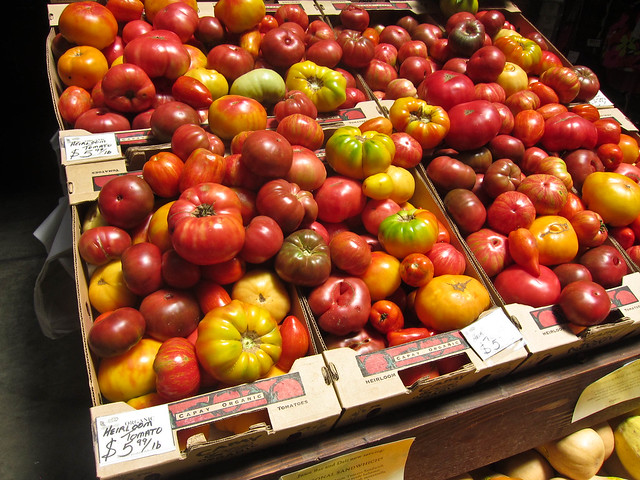
pomodori

*That day in the Ferry Market Building, I instantly perked up when I heard the old couple behind me speaking Italian. I wanted so badly to turn around and tell them, "I speak some Italian too! Parla italiano troppo! I can be a little bit of your home away from home!" A nervous ball of excitement welled up in my belly as I flip-flopped back and forth between bursting out with a discombobulated mess of Italian words and keeping respectfully silent. The latter wasn't much of an option actually - it was only a matter of how long it would take for me to push myself over the edge. After a few minutes passed by and the old man had walked away, leaving his wife to stand in the bathroom line alone, I turned around slowly, praying that I would not embarrass myself or worse, scare this woman away from America, I asked, "Sei d'Italia? Parlo un po' d'italiano perche ho passato un semestre a Firenze. Are you Italian? I speak a little Italian because I spent a semester in Florence." To my relief and delight, she smiled warmly and instantly began spewing out Italian. "Si! Sono di Firenze! Yes, I am from Florence!" She spoke quickly and like most Italians, was generous and unreserved with her words. From there on out, we spoke only in Italian, and for a moment I felt like I was back in Italy again, thousands of miles away from California. I'm not sure what the people around us made of the whole situation, an Asian girl and an older woman speaking Italian in the middle of a farmers' market in San Francisco, but in the moment, that thought did not even cross my mind. We talked about her vacation plans in the States and where she lived in Florence where I lived in Florence and what I studied while I was there. After 7 months of not speaking a word of Italian, I struggled to recall words and tenses and verbs and could not even remember the street I lived on in Florence. Perhaps I had banished many of those memories from my mind, I don't know.

*By the time we reached the front of the bathroom line, we had been talking for twenty minutes, and as I headed into the next open stall, I turned around, smiled, and said "Ciao." I wanted to say something fancier and more eloquent like "Have a good time in San Francisco!" or "It was nice meeting you!" but the only word I could find in my mouth was "Ciao." I'd like to speak Italian again, but I am not sure when I will have the chance. Despite the baggage of memories that Italian carries for me, I learned to hear and speak it like a whirlwind romance, and that romance is certainly bittersweet and unforgettable. For now, the language lives inside me, in memories, in dreams and in nightmares, in a little pocket of my soul that I will never throw away.


7.31.2011

this is the bloom from then til now

011_15A
018_8A

*I spent this past weekend in San Diego visiting one of my best friends. We grew up in church together and stayed close throughout high school and college.

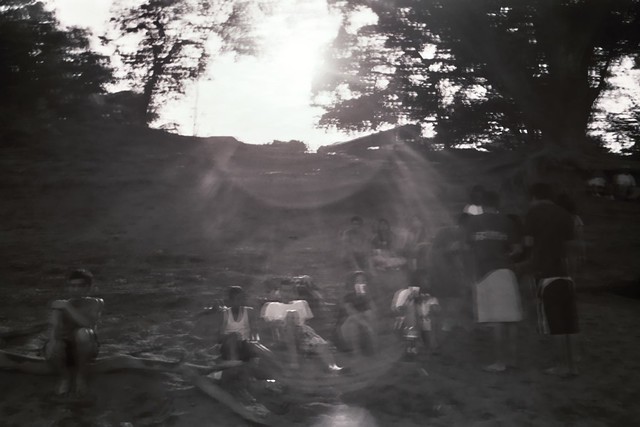
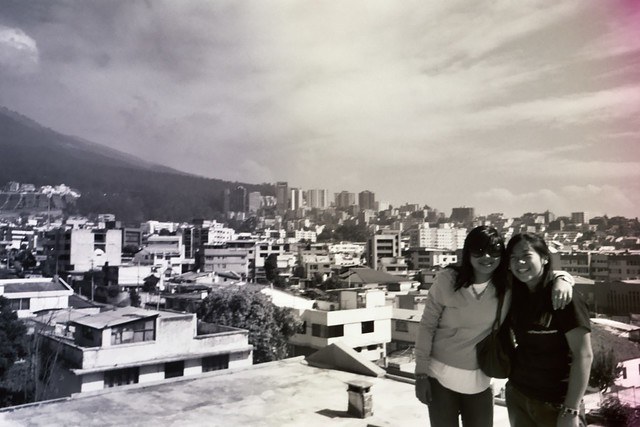
*With so many of my friends, I can recall a moment in the past when we moved beyond being mere amicable acquaintances (or "pals") into the realm of intimacy. This usually accompanies a shared experience or the special discovery of a shared interest or love or passion. With my best friend in San Diego, this moment occurred when we were fourteen years old in the small village of Ricaurte in Ecuador, on a muggy night when we were both wearing t-shirts, Bermuda shorts, and flip-flops.

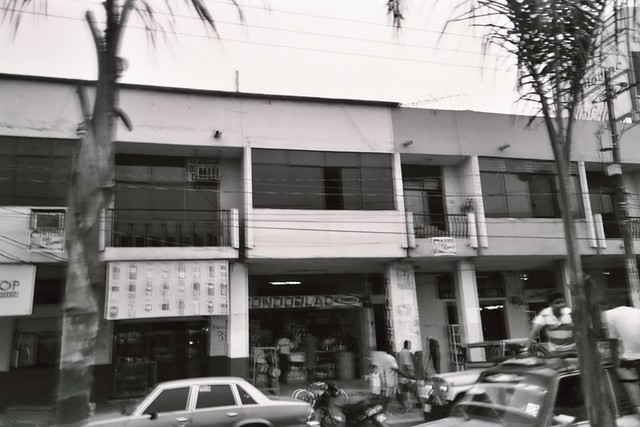
*After a couple days spent in Quito - where my most salient memory was of the freezing cold hostel showers we had to endure every morning - we boarded a rickety old bus whose rusty, broken windows would not close. We were headed out of the city and up into the mountains, where civilization was dispersed much more sparsely. E and I sat next to each other on the bus, I by the window, she in the aisle, and we shared headphones and ate the plantain chips we bought through the bus windows from the tanned men on the side of the road. After one bus breakdown and several sightings of bloody hogs hanging like sacks off the shingles of roadside food stands, we arrived in a town where we were greeted by lonely and misplaced murals. As we stared out of the bus windows, blown-up faces of politicians stared back at us - unashamed remnants of propaganda from past campaigns; the roads we cruised along were without street signs and lined by barefoot kids who waved to us ecstatically because the fact that were were strangers or intruders was less significant than the fact that we were novelties in their small town. By the time we arrived, it was nearly dusk, and after a much-needed dinner of greasy fried rice, we were sent off to our host families. E and I went off with a young man named Pablo, who lived across the river from the town in which we had disembarked. On the way over, we struggled to communicate. I spoke the Spanish I knew and gestured when necessary.

013_13A

*I know what it is like to be a foreigner, a visitor in a place where you clearly do not belong - physically, racially, ethnically, visually - and that feeling, when intensified to that of being an intruder - makes one vulnerable, and uncomfortably so. The feeling of vulnerability - felt so acutely by both E and I - escalated through the night as we realized how many stares were directed our way from old women, little children, and the teenage boys loitering on their scooters who were clearly scouting out girls, as we began to understand the departure from the familiarity and comfort of suburban America that we had committed to by having boarded the plane to Ecuador in the first place.

*That night, after we had kissed Pablo's sweet, citrus-scented mother on both cheeks and were sitting on our dusty beds in a room where cats lurked in the corners and shadows, where the wooden panels beneath our feet were dusty like outdoor patios, we were restless and itchy from the mosquitoes that had already began to attack us and from the thought that we had no bathroom - save a faucet on an outdoor balcony. We sat on our adjacent beds silently staring at one another, not knowing whether to laugh or cry - or sob violently - and it was in that very moment that the vulnerability and shock this new place had laid upon us was also blooming into an immense gratitude for each other and an empathic bond which found its strength in the knowledge that we would be the only ones to have this exact experience together. We wouldn't realize this until much later, when, back in the States we were laughing at the tears we almost cried together.

*Much has changed in the six years since our time in Ecuador. Now, she in San Diego, and I in Northern California and Boston and beyond, we are different people than we were then and our friendship has certainly grown and changed similarly. But this past weekend, as we spent hours sitting lazily in coffee shops, driving around, walking, sometimes chatting, often not, I saw how so much of what is between us has not changed at all - a fact that is as comforting as the fact that so much of us does and has to and will continue to change.

_MG_9839

*I can only hope that fifty years down the line - even sixty or seventy - when the precariousness of our lives becomes increasingly apparent with each passing day - that we will still be laughing and crying and aching together, sitting silently and talking lovingly, with the kind of comfort and contentedness that can only spring from the vulnerability of a moment and the years of friendship that follow.